01
Explaining the diagnosis and the options
Turn findings into a plan the patient understands, even when they’re too overwhelmed to process what they’re hearing.
Video avatar · Audio call
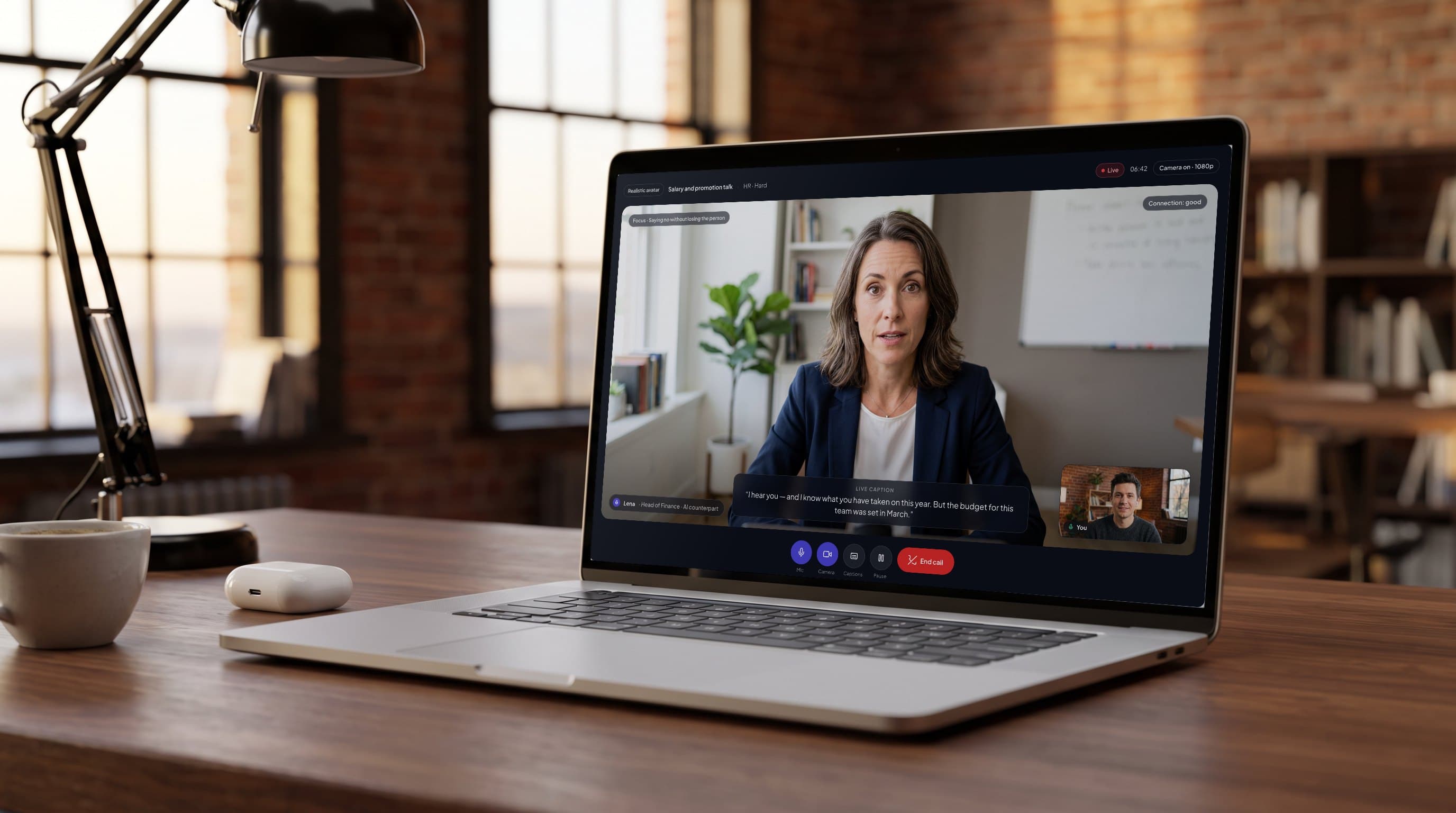
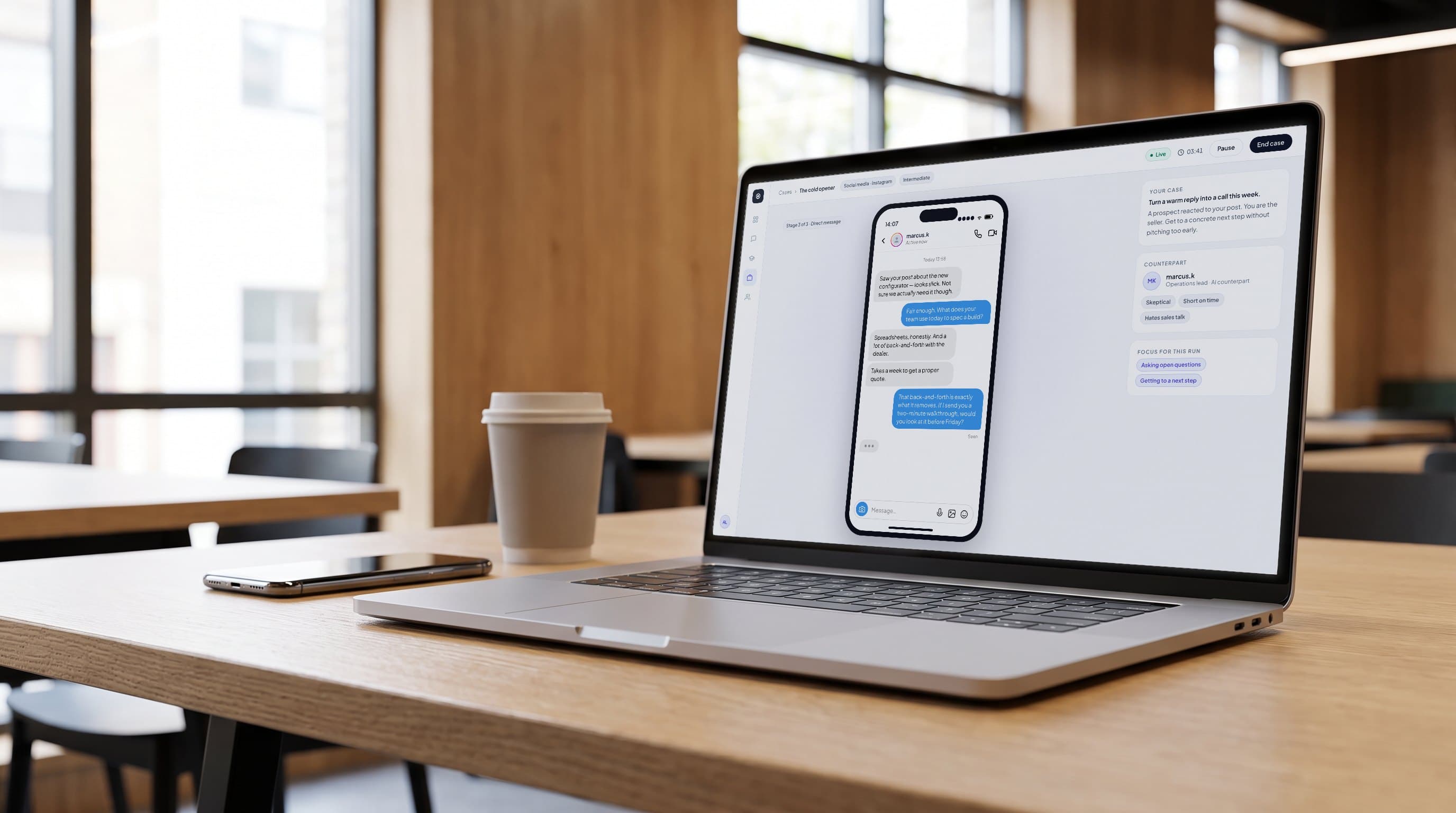
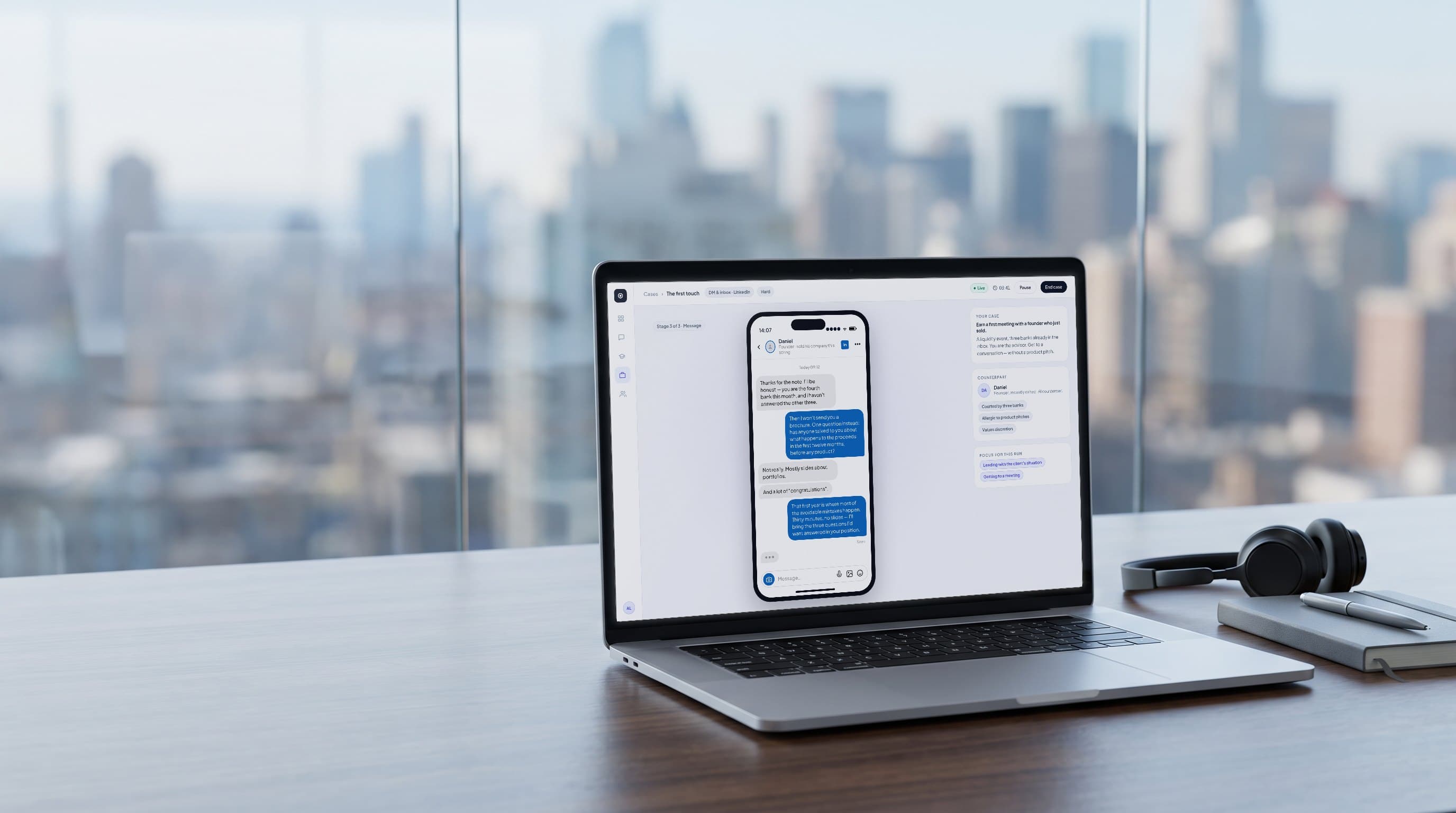
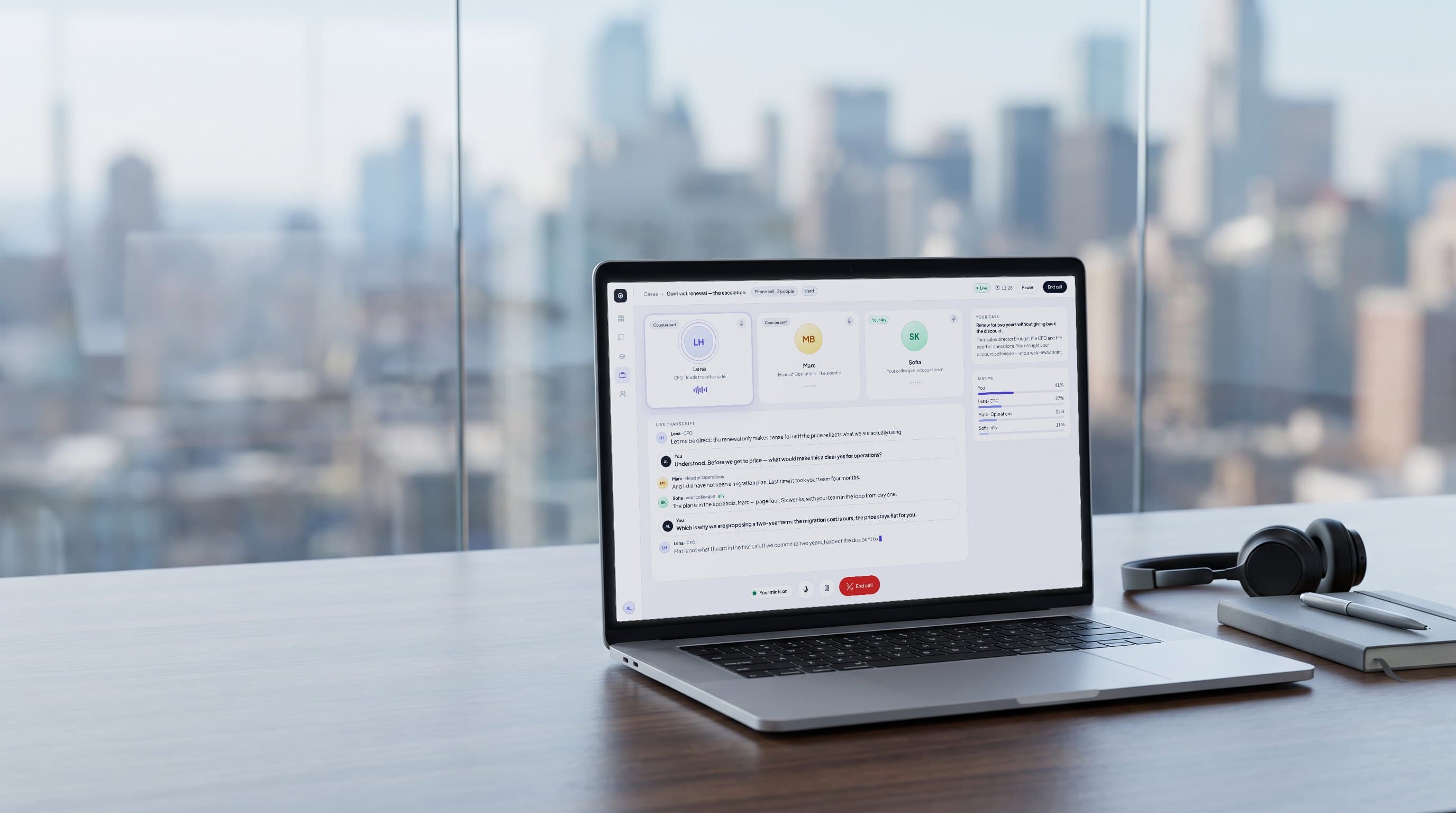
Explaining a diagnosis, breaking bad news, discussing treatment, facing a worried relative who wants answers now. Practice the conversations nobody should have to improvise, with patients and families who react like real people.
This saves time in every consultation, reduces follow-up, and shapes how every patient remembers their care.
Simpanion evaluates communication skills and conversation handling, not clinical diagnosis or treatment decisions.
Build trust, understanding and confidence before the conversation is real.
Explaining the diagnosis and the options
Turn findings into a plan the patient understands, even when they’re too overwhelmed to process what they’re hearing.
Video avatar · Audio call
Breaking bad news
A serious diagnosis, delivered so the patient can actually take it in. Practice the words, the pause and the silence that follows.
Video avatar · Audio call
The patient who researched online
The patient arrives having researched symptoms, treatments and alternatives and questions your recommendation. Take their concerns seriously, correct misconceptions without dismissing them, and work toward a plan they can trust.
Audio call · Text chat
The anxious relative
Someone’s mother is on the ward and the family wants answers now. Stay clear and compassionate while handling uncertainty, pressure and the boundaries of what you can share.
Video avatar · Audio call
The family conversation
Patient, partner and adult child in one room, three different wishes. Lead the conversation instead of refereeing it.
Meeting
When something went wrong
An error, a delay, a result that was missed. Show genuine care while choosing your words with the consequences in mind.
Audio call · Video avatar
Every Healthcare run is scored against your criteria — the ones you define, in your words. Strengths and gaps land on the dashboard, the moments that decided it are quoted back, and the conversation can be taken again from any of them.
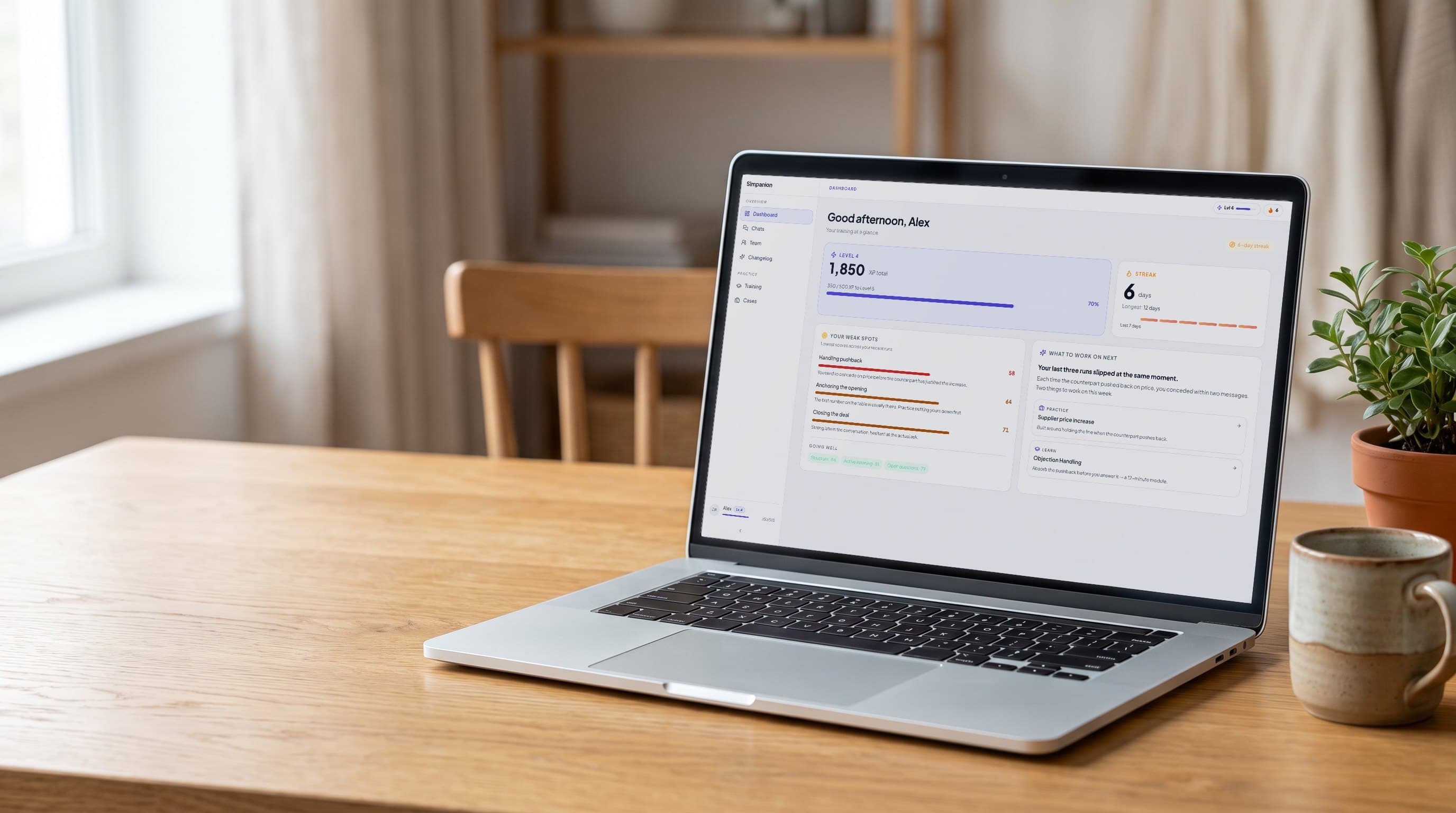
Your first Healthcare cases come from your own situations — built with your team during onboarding, never from a generic library.